
How to Write a Research ProposalHow to write your Research Proposal
research proposalWhat is
A research proposal is a document that systematically describes the purpose, methods, schedule, budget, and other elements of a planned study. It serves as a guide for planning and carrying out a research project and is often submitted to funding bodies or academic institutions. A research proposal commonly includes the following elements.When preparing an undergraduate thesis research proposal within a university, it is especially important to describe the study systematically and in sufficient detail by following the steps below.
The following guidance is intended to help students carry out research projects efficiently and meaningfully.
Step 1: Title
Set a title that concisely represents the content of the study. Aim for wording that is specific and easy to understand. A good title should communicate the study accurately and succinctly. The following points can help when developing an effective title.
1. Clarify the Main Subject of the Study
Choose words that specifically indicate the topic or problem addressed in the study. Confirm that the title accurately reflects the research content.
2. Keep It Concise
Omit unnecessary prepositions and conjunctions and use only the words needed to convey the topic. As a general guideline, a title of roughly 10–15 words is often considered appropriate.
3. Include Keywords
Including important keywords from the research field can improve visibility in searches and help make clear what the study is about.
4. Attract the Reader's Interest
Use wording that is likely to interest the intended audience. A question format or wording focused on results or implications may be effective when appropriate.
5. Indicate the Research Method or Type of Data
When appropriate, mention the research method, such as a case study or meta-analysis, or identify a particular dataset. Stating the methodology can help indicate the scope and depth of the research.
6. Review and Refine Repeatedly
Develop several possible titles and evaluate the strengths and weaknesses of each.
Ask your supervisor or colleagues for feedback and use it to decide on the final title.
The title is the “face” of a research paper and is often the first part seen by readers. A title can therefore strongly influence initial interest and understanding. Use the guidelines above to create a title that communicates the content of the research accurately and attractively.
Step 2: Research Background
When writing the research background, provide a clear and persuasive explanation that allows readers to understand why the study matters. This section establishes the basis for understanding the importance of the topic and the purpose of the research. The following points explain how to write an effective research background.
1. Overview of the Research Field
Provide basic information about the field related to the topic and establish the current level of knowledge and understanding. Explain why the field is important and identify relevant social or academic concerns.
2. Identify the Problem
Specify the particular problem or gap that the study addresses. Emphasize issues that remain unresolved or have been treated inadequately in existing research or theory.
3. Review Previous Studies
Briefly review relevant previous studies and explain how your research builds on, extends, or challenges them. Cite important findings or theories and show how they relate to the current research problem.
4. Significance of the Research
Explain not only the academic importance of the study but also any practical or social significance. Highlight possible changes, improvements, or contributions that the findings may produce.
5. Research Purpose and Research Questions
State the main purpose of the study clearly and formulate the specific research questions it seeks to address. The research purpose should indicate how the study aims to provide a solution, explanation, or deeper understanding of the problem.
6. Scope of the Research
Define the scope of the study, including the regions, time periods, populations, or variables covered. It is also important to recognize limitations and explain how they may affect the findings.
7. Formulate Hypotheses, If Applicable
State clear hypotheses and indicate the expected relationships or outcomes. Hypotheses should be based on the research questions and must be testable.
8. Structure of the Study
Briefly explain the structure of the research proposal and outline the content to be covered in each chapter or section.
By combining these elements carefully, readers can understand the background from which the study emerges and the value it is intended to provide. The research background is an important part of the introduction to a proposal or paper and helps establish the tone and direction of the entire study.
Step 3: Research Purpose
The research purpose is a central element of a research proposal or paper. It guides the entire study and is essential for defining the significance, direction, and focus of the research. The following steps help clarify and describe the research purpose.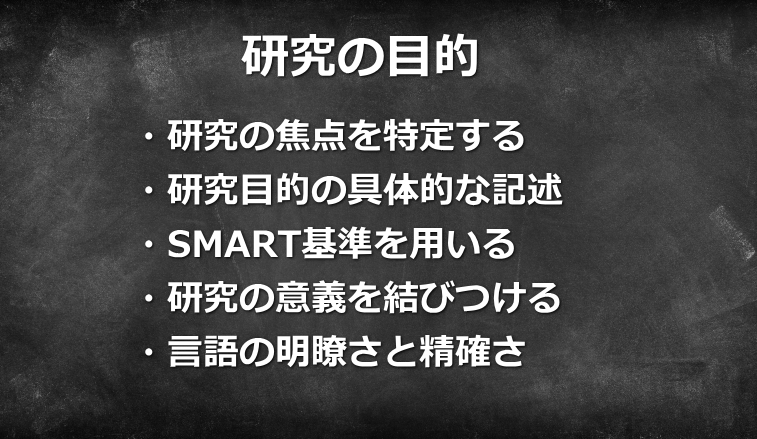
1. Identify the Focus of the Research
Clarify the specific problem or question the study seeks to address. Narrow the scope and determine the particular area or issue on which the research will focus.
2. State the Research Purpose Specifically
Describe the concrete goals the study seeks to achieve. State clearly what you intend to discover, demonstrate, clarify, or develop. If there are multiple objectives, distinguish and list them separately.
3. Use the SMART Criteria
Specific: The objective should be concrete and clear. Measurable: It should be possible to evaluate the degree of achievement. Achievable: It should be realistic within the available resources and time. Relevant: It should be meaningful and related to the broader research problem or goal. Time-bound: A clear timeline should be established for achieving the objective.
4. Connect the Purpose to the Significance of the Study
Explain how the research purpose contributes to academic discussion, practice, or policy. Address the potential impact and possible applications of the findings and emphasize the broader value of the study.
5. Use Clear and Precise Language
Choose language that is technically appropriate while remaining understandable. Define specialized terms when necessary and clarify their meaning in the context of the study.
6. Engage the Reader
The statement of research purpose should be written in a way that draws the reader's interest. If readers can understand why the study matters at this stage, they are more likely to remain engaged with the rest of the document.
A clearly stated research purpose contributes directly to a successful research plan. The clearer the purpose, the easier it is to maintain a consistent direction and focus throughout the research process.
Step 4: Research Methods
The research methods section explains specifically what procedures and techniques will be used to address the research purpose and questions. A clear description of methods is important for improving the transparency, reproducibility, and reliability of the study. The major elements are outlined below.
1. Research Design
Research type: Specify whether the study is qualitative, quantitative, or mixed methods and explain why this approach is appropriate. Research structure: Identify the framework, such as a case study, survey, experiment, cohort study, longitudinal study, or cross-sectional study.
2. Data Collection Methods
Type of data: State whether primary data collected directly or secondary data from existing sources will be used. Specific methods: Describe the methods used to collect data, such as interviews, questionnaires, observation, literature review, or experiments. Sampling: Explain how the sample will be selected, such as random, stratified, or convenience sampling, and state the planned sample size.
3. Data Analysis Methods
Qualitative analysis: Explain how qualitative data will be analyzed, such as content analysis, thematic analysis, or discourse analysis. Quantitative analysis: Describe the statistical methods to be used, such as descriptive statistics, inferential statistics, regression analysis, or ANOVA. Software: Identify statistical or qualitative-analysis tools, such as SPSS, R, or NVivo, when applicable.
4. Ethical Considerations
Participant consent: Explain how consent will be obtained for the collection and use of participants' information. Privacy and confidentiality: Describe how collected data and participants' privacy will be protected. Ethics review: If approval by an ethics committee is required, describe the relevant process.
5. Limitations
Study limitations: Evaluate and describe methodological limitations, potential biases, and other constraints honestly. Mitigation: Explain strategies for minimizing the effects of these limitations on the findings.
6. Ensuring Reliability and Validity
Reliability: Explain how the study will maintain consistency and, where applicable, reproducibility. Validity: Explain how well the methods and findings address the stated research purpose and questions.
The methods section provides a basis for evaluating the accuracy and credibility of the research. Describing these elements clearly makes it easier for other researchers to assess the study and, where appropriate, reproduce it.
Step 5: Research Schedule
A research schedule is an important part of project planning. It helps ensure that each phase proceeds according to a clear timeline and provides a framework for managing progress and meeting research objectives within the available time. The principal steps for preparing a detailed research schedule are described below.
1. Define the Research Phases
Divide the project into phases. These commonly include preparation, data collection, data analysis, writing up results, and review and revision. Clearly define the main activities and objectives of each phase.
2. Create a Timeline
Set start and end dates for each phase based on the total project period and deadlines. A calendar or Gantt chart can make the schedule easier to visualize, track, and manage.
3. Establish Milestones
Include important checkpoints or milestones in the timeline. These may include ethics approval, completion of major data collection, or submission of a first draft. Milestones serve as reference points for measuring progress.
4. Allow for Flexibility
Unexpected delays or problems may occur during research, so the schedule should include some flexibility. Building in buffer time can make it easier to respond to unforeseen delays.
5. Consider Resources and Dependencies
Confirm that necessary resources, including personnel, equipment, and funding, will be available during each phase. Clarify how one phase depends on another and adjust the schedule accordingly.
6. Review and Update Regularly
A research schedule is a dynamic document that should be updated as the project progresses. Review it regularly and make adjustments when necessary.
7. Document and Share the Schedule
Document the research schedule and share it with relevant stakeholders, such as the research team, supervisor, or funding body. Maintaining transparency helps everyone understand the project's progress and respond appropriately.
Detailed planning and management of the research schedule are essential to the successful completion of a research project. Setting a clear schedule and managing it effectively makes achievement of the research goals more likely.
Step 6: Expected Outcomes and Dissemination
In a research proposal, the section on “Expected Outcomes and Dissemination” explains what the study is expected to produce and how those outcomes will be used after the research is completed. This section is important for demonstrating both the practical value and academic contribution of the study. The following guidelines can help structure it effectively.
1. Identify the Research Outcomes
Concrete outcomes: Specify the outputs expected directly from the study. Depending on the project, these may include new data, theoretical advances, technological innovations, policy recommendations, treatment approaches, or software tools.
Academic outputs: Specify contributions to the academic community, such as journal papers, conference presentations, books, or book chapters.
Formats: State the form in which outputs will be delivered, such as journal articles, conference presentations, white papers, patents, or prototypes.
2. Impact of the Outcomes
Academic impact: Explain how the study may deepen knowledge or understanding in the field or provide new insights into existing theories or models.
Industry and social impact: Describe possible concrete changes that technological innovations or policy recommendations could bring to industry or society.
Application to policy or practice: Explain how the findings may be useful to policymakers, practitioners, or the wider public.
3. Dissemination and Utilization Plan
Dissemination activities: Plan how the results will be communicated. This may include journal submission, conference presentations, workshops, and sharing information through websites or blogs.
Promoting collaboration: Consider how cooperation with other researchers or institutions could extend the impact of the findings.
Commercialization: If the outcomes may have commercial value, consider possible routes to market, including business planning, entrepreneurship, or partnerships with industry.
4. Long-Term Perspective
Sustainability: Consider how the outcomes may continue to be used over the long term.
Pathways for future research: Explain how the current study may provide a foundation for subsequent research projects.
5. Timeline and Resources
Schedule for achieving outcomes: Present the planned timeline for producing each major output.
Required resources: Identify any additional funding, equipment, personnel, or other resources needed to achieve and disseminate the outcomes.
Describing the expected outcomes and their dissemination in detail helps demonstrate that a research plan is practical and capable of producing meaningful impact. It also enables funding bodies and other stakeholders to assess the value of the research project more clearly.
Step 7: References
References in a research proposal or academic paper are important for showing that the study is grounded in existing knowledge and for supporting the reliability and coherence of the research. Proper referencing makes the sources of information clear to readers and improves transparency. The following points explain how to prepare references effectively.
Relevance: Select literature directly related to the research topic, including important sources that influence the theoretical background, previous studies, methodology, data analysis, and discussion.
Reliability: Give priority to information from published journals, academic books, and reliable online sources. Peer-reviewed journal articles are generally regarded as particularly reliable academic sources.
Currency: Cite recent research where appropriate, while also including classic or foundational literature that remains important to the field.
2. Choosing a Citation Style
Consistency: Use one citation style consistently, such as APA, MLA, Chicago, or Harvard, in accordance with the standards of the academic field.
Style guide: If your supervisor or the journal to which you plan to submit specifies a particular style guide, follow those instructions.
3. Writing Citations
In-text citations: When citing information in the text, include the author's name and year of publication. Example: (Smith, 2020).
Direct quotations: When quoting directly, also include the page number. Example: (Smith, 2020, p. 32).
4. Preparing the Reference List
Alphabetical order: Arrange entries alphabetically by the author's surname.
Complete information: Include the author, year of publication, book title and publisher, or for journal articles, the journal title, volume and issue, and page range.
Electronic resources: When citing online sources, include the access date and URL or DOI (Digital Object Identifier) as required by the citation style.
5. Using Software Tools
Reference-management software: Tools such as EndNote, Zotero, and Mendeley can help organize citations and reference lists, reduce errors, and save time.
6. Copyright and Ethical Considerations
Respect for copyright: Follow copyright law, especially when quoting source material directly, and obtain permission when required.
Preventing plagiarism: Paraphrase and summarize appropriately in your own words and cite all sources correctly to avoid plagiarism.
Accurate referencing in research proposals and papers is essential for establishing credibility and positioning research within the academic community. Appropriate use of references strengthens the foundation of a study and supports the validity of its conclusions.
Contact
To date, we have supported clients throughout Japan and overseas.over 10,000 casesWe have supported a wide range of academic requests, including graduation/master’s thesis research and report/paper support. Our experienced consultants work closely with clients to meet their needs. We provide prompt and accurate support at reasonable prices, and our Ibooks team members throughout Japan take responsibility for assisting each client.
We send the profile of the responsible staff member when you apply.
For Undergraduate / Master's Thesis Research Support, Report Support, and Paper Support, choose iBooks Academic Support!
0476-85-7930
When orders are busy, phone lines may be difficult to connect.
We will reply in order; if urgent, please contact us byEmail please contact us by this method.
When orders are busy, phone lines may be difficult to connect.
We will reply in order; if urgent, please contact us by
