
How to Write Nursing ReportsHow to write your Nursing Reports
What Is a Case Study?
Nursing reports, particularly case studies, are important learning tools that help nursing students and nurses reflect on their own practice and improve nursing skills. A case study focuses on a specific clinical case and involves formulating and examining hypotheses. It may be regarded as a form of preliminary nursing research because it explores an individual case in depth. While nursing research may address broader aspects of nursing practice, a case study concentrates on a particular patient or event.Step 1: Purpose of a Case Study
The main purposes of a case study are to improve nursing skills and strengthen problem-solving abilities in clinical practice. It can be used to evaluate one's own nursing practice and gain new insights into patient care. Through this process, nurses can improve the accuracy of clinical judgment and develop greater awareness of ethical issues.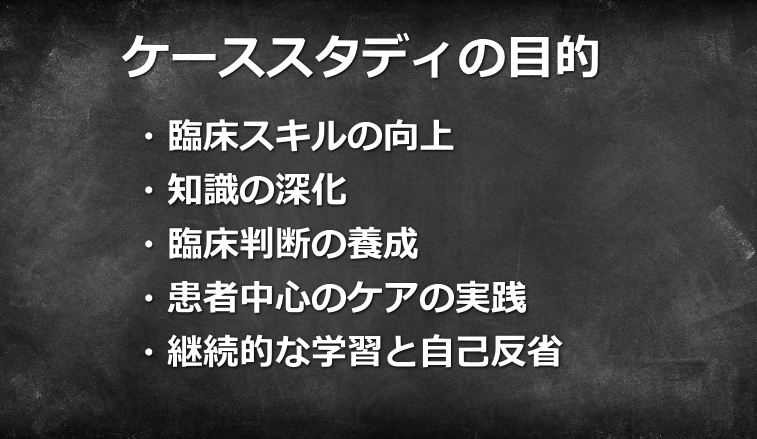
The purpose of a case study is to understand an individual case in nursing practice in depth and, through that analysis, improve nursing skills and the accuracy of clinical judgment. The principal purposes are described below.
1. Improving Clinical Skills
One major purpose of a case study is to improve nursing skills in a specific clinical situation. By analyzing actual patient-care cases in detail, nurses can learn about the applicability and effectiveness of particular nursing techniques and interventions. This may include assessment, nursing care planning, implementation of interventions, and evaluation.
2. Deepening Knowledge
Case studies can also deepen knowledge about specific diseases and health problems. Through individual cases, nurses can examine pathophysiology, treatment approaches, and current research or guidelines for nursing management, thereby strengthening the connection between theory and practice.
3. Developing Clinical Judgment
Case studies help nurses develop the clinical judgment required in complex situations. Identifying clinical problems, selecting appropriate nursing interventions, and evaluating their effects on the basis of actual cases provide valuable opportunities to strengthen decision-making skills.
4. Practicing Patient-Centered Care
By focusing on the unique needs and circumstances of each patient, case studies deepen understanding of patient-centered care. This approach can support the development and implementation of nursing plans tailored to individual patients.
5. Addressing Ethical Issues
Actual nursing cases often involve ethical dilemmas. Case studies require nurses to identify these ethical issues and consider appropriate responses, helping them develop ethical judgment and protect patients' rights and dignity.
6. Continuing Learning and Self-Reflection
Case studies also function as tools for reflecting on one's own nursing practice and promoting professional growth. Nurses can identify their strengths and weaknesses and continue learning to improve the knowledge and skills they need.
By pursuing these purposes, case studies can contribute not only to the development of individual nurses but also to improvements in the quality of nursing teams and, ultimately, patient care.
Step 2: Case-Study Approaches
Case-study approaches can broadly be divided into two types: “historical studies” and “incident studies.” These approaches are selected according to the focus and purpose of the study and provide different forms of insight into nursing practice.
1. Historical Study
A historical study follows and analyzes a patient's medical history and course of nursing care over time. It may examine medical and nursing records from the initial consultation to the end of treatment or across a defined period.
Purpose and characteristics:
Understanding the overall picture: Evaluate the influence of nursing interventions across the patient's entire treatment history.
Observing long-term changes: Follow disease progression and responses to treatment over time and examine the long-term effects or adverse effects of interventions.
Inferring causal relationships: Consider how particular nursing interventions may have influenced patient outcomes.
2. Incident Study
An incident study focuses on a particular event or a specific point in a nursing intervention and analyzes the decisions and effects associated with that moment. It concentrates on one event or a short period and examines the case in detail.
Purpose and characteristics:
Immediate problem solving: Analyze nursing responses to a specific clinical problem or emergency and evaluate their effectiveness and limitations.
Considering countermeasures: Examine responses and improvements related to the problem and derive lessons that may help prepare for similar situations in the future.
Educational use: Use a specific case as teaching material to provide concrete learning opportunities in education and training.
Examples of situations in which each approach may be used:
Historical Study:
Nursing care for a patient with a chronic condition over a long period
Effects of interprofessional collaboration in end-of-life care for a patient with cancer
Incident Study:
Effectiveness of the initial response to a patient with acute myocardial infarction
A medication-administration error in clinical practice and the subsequent response
These approaches provide different perspectives and can contribute to improving the quality of nursing practice. The method selected should depend on the purpose of the study, the patient or population involved, available data, and time and resource constraints.
Step 3: Structure of a Case Study
The structure of a case study is designed to develop a deep understanding of a specific nursing case through careful investigation and analysis. A typical case-study report may be organized as follows.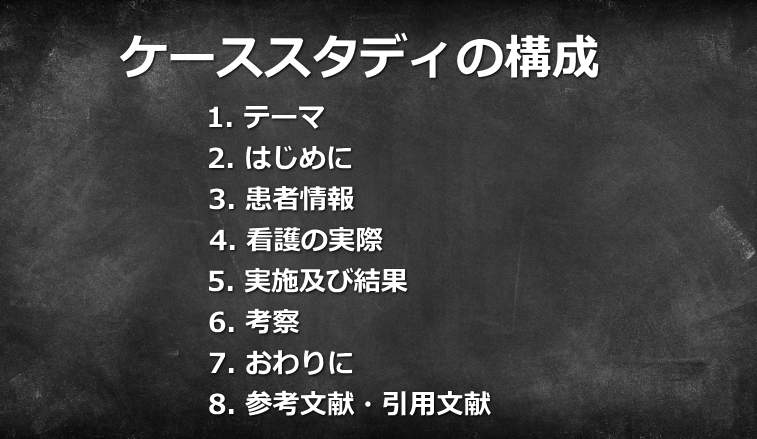
1. Theme
Clearly define the motivation and purpose of the case study and the subject of the research. This includes the specific nursing issue or problem to be examined. Because the theme determines the direction of the study, it should be expressed clearly and specifically.
2. Introduction
Outline the research background, the context of the problem, and the importance of the study. Explain why the case was selected, what nursing issues are involved, and clearly state the purpose or hypothesis of the study.
3. Patient Information
Provide relevant information about the patient who is the subject of the case study. This may include basic background characteristics such as age, sex, and occupation; medical history; current health status; chief complaint; diagnosis; and treatment plan. To protect privacy, personal information should be anonymized appropriately.
4. Nursing Practice
Describe in detail the nursing interventions that were actually performed. This may include assessment findings, nursing diagnoses, planned interventions, how the interventions were implemented, and the clinical judgments considered during the process. A concrete account of practice provides an important basis for later analysis.
5. Implementation and Results
Describe the outcomes after the intervention and the patient's responses. Analyze specifically how the intervention affected the patient, including effective interventions, unexpected events, and changes in condition. This is a central section for evaluating nursing outcomes.
6. Discussion
Discuss in detail the effects of the interventions, insights gained through the case study, and lessons learned. Consider factors associated with successful interventions, areas for improvement, and newly identified issues. This section can also connect theory with practice and suggest directions for future research.
7. Conclusion
Briefly summarize the study and the major outcomes or implications of the case study. You may also emphasize its significance for nursing practice or education and identify the need for further research.
8. References and Cited Sources
List the literature, studies, and guidelines consulted in preparing the case study. This strengthens the credibility of the work and allows other researchers and practitioners to trace the sources used.
A case study structured in this way is a valuable tool for deepening professional nursing knowledge and improving the quality of practice. Each section is related to the others and together they provide a comprehensive understanding and practical insight.
Step 4: Example Themes
Case-study themes are selected according to learning objectives and clinical interests. By examining particular nursing problems or the effectiveness of interventions through specific cases, case studies help bridge theory and practice. The following are examples of possible nursing case-study themes covering a range of situations faced by nurses and encouraging detailed analysis of particular patient groups and nursing practices.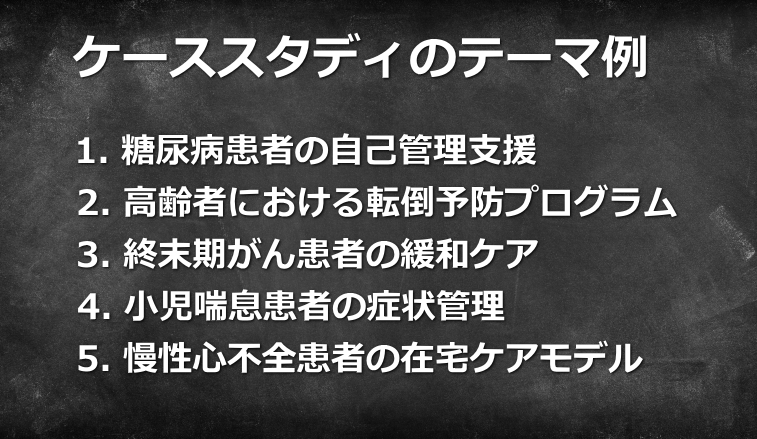
1. Supporting Self-Management in Patients with Diabetes
Purpose: Evaluate the effectiveness of nursing interventions that help patients with diabetes manage their condition in daily life.
Possible interventions: Patient-education programs, motivational interviewing, and digital monitoring tools.
Evaluation indicators: Improved glycemic control, increased self-management behaviors, and improved quality of life.
2. Fall-Prevention Programs for Older Adults
Purpose: Examine the effectiveness of nursing interventions designed to reduce fall risk among older adults living in institutions or in the community.
Interventions: Exercise programs to improve balance and strength, environmental modifications, and educational sessions.
Evaluation indicators: Reduced fall incidence, improved functional independence, and improved knowledge of safety.
3. Palliative Care for Patients with Terminal Cancer
Purpose: Analyze how palliative-care approaches affect pain management and quality of life in patients with terminal cancer.
Interventions: Pain-management protocols, spiritual support, and family support.
Evaluation indicators: Reduced pain, improved psychological and emotional stability, and family satisfaction.
4. Symptom Management in Children with Asthma
Purpose: Investigate the effects of asthma-management plans at school and home on the frequency and severity of asthma attacks in children.
Interventions: Development of an asthma action plan, regular follow-up, and education for parents.
Evaluation indicators: Reduced frequency and severity of attacks and improved ability to manage symptoms at school and home.
5. Home-Care Model for Patients with Chronic Heart Failure
Purpose: Evaluate the effects of an interprofessional home-care model on readmission rates and quality of life among patients with chronic heart failure receiving care at home.
Interventions: Regular home nursing visits, remote monitoring systems, and nutrition and exercise guidance.
Evaluation indicators: Readmission frequency, quality of daily activities, and symptom management.
These themes can be adapted to specific patient circumstances and nursing problems and can provide practical solutions and insights for challenges encountered in nursing practice. Findings from case studies may contribute not only to better nursing practice but also to improvements in related policies and protocols.
Step 5: Points to Note in Implementation (Ethical Conduct)
When conducting a case study, particular attention must be paid to ethical conduct. Protecting the dignity and rights of patients is one of the most important aspects of nursing research. The following points describe key ethical considerations in case-study research.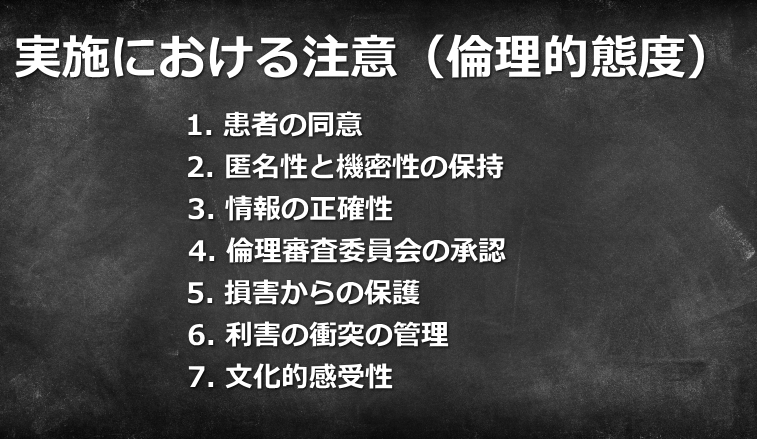
1. Patient Consent
When using a patient as the subject of a case study, clear consent should be obtained for use of the relevant information. The consent process should explain the purpose of the study, what information will be used, and how it will be handled. Written consent should be obtained whenever possible.
2. Maintaining Anonymity and Confidentiality
To protect patient privacy, personally identifiable information should be appropriately anonymized. Case-study data should also be kept confidential and protected from access by unauthorized third parties outside the research team.
3. Accuracy of Information
Information presented should be accurate, and researchers should avoid misinterpreting or misreporting patient data. Findings should be analyzed and reported objectively and without inappropriate bias.
4. Approval by an Ethics Review Committee
Research involving human participants commonly requires approval from an ethics review committee or Institutional Review Board (IRB). This process helps confirm that the research plan meets applicable ethical standards.
5. Protection from Harm
If the research may create a risk of harm to the patient, measures should be taken to minimize that risk. If the patient experiences disadvantage or harm related to the study, appropriate remedial measures should be considered in accordance with applicable procedures.
6. Managing Conflicts of Interest
Researchers should disclose and appropriately manage any interests that could influence the research or its results. Proper management of conflicts of interest helps maintain fairness and credibility.
7. Cultural Sensitivity
For patients from different cultural backgrounds, it is important to respect cultural needs and values. Considering cultural differences during study design and implementation can help prevent ethical problems.
These ethical principles are essential for ensuring the quality of case studies, protecting patients' rights, and maintaining the credibility of nursing research. Conducting research responsibly provides a foundation for trust among researchers, participants, and the nursing profession.
Contact
To date, we have supported clients throughout Japan and overseas.over 10,000 casesWe have supported a wide range of academic requests, including graduation/master’s thesis research and report/paper support. Our experienced consultants work closely with clients to meet their needs. We provide prompt and accurate support at reasonable prices, and our Ibooks team members throughout Japan take responsibility for assisting each client.
We send the profile of the responsible staff member when you apply.
For Undergraduate / Master's Thesis Research Support, Report Support, and Paper Support, choose iBooks Academic Support!
0476-85-7930
When orders are busy, phone lines may be difficult to connect.
We will reply in order; if urgent, please contact us byEmail please contact us by this method.
When orders are busy, phone lines may be difficult to connect.
We will reply in order; if urgent, please contact us by
